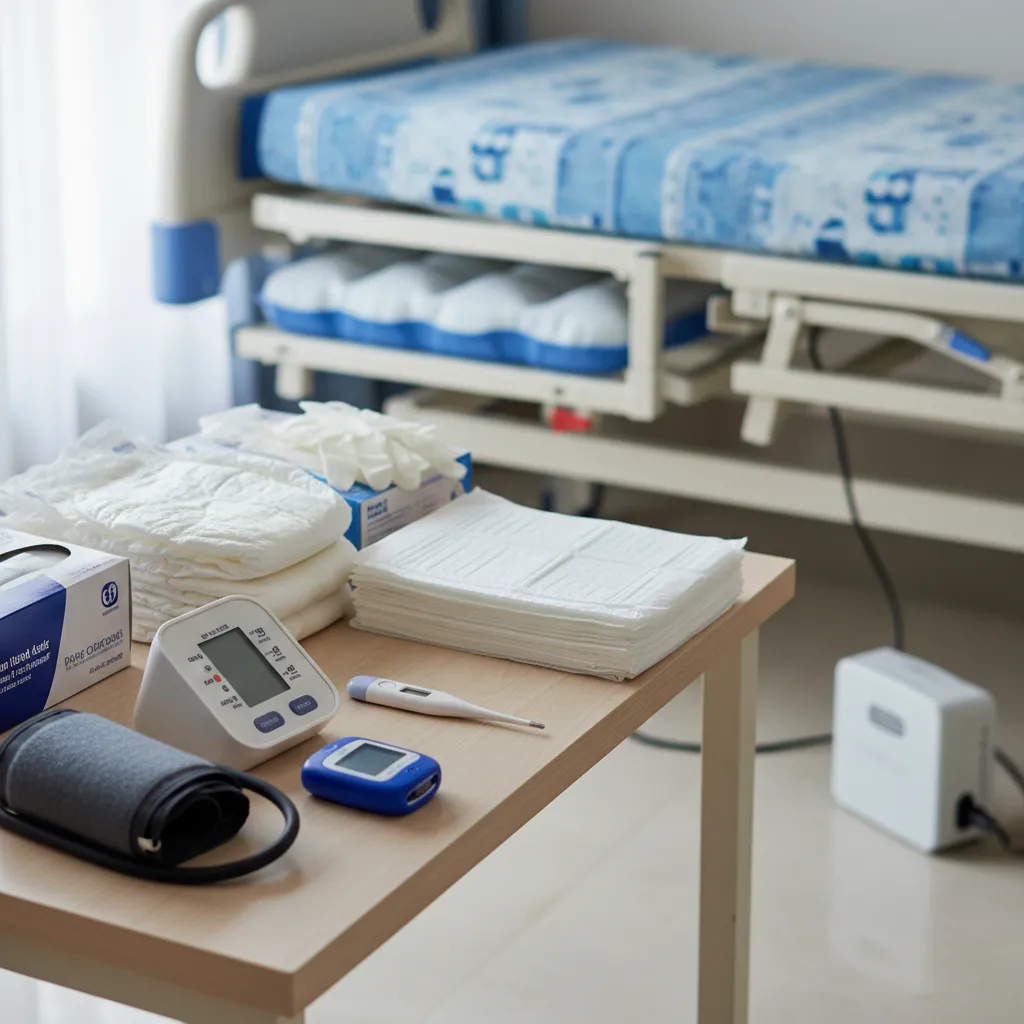
Families managing a bedridden patient — especially after a surgery — often navigate a complex blend of clinical routines, emotional strain, and logistical challenges. The risks escalate without a structured care plan: infections, pressure sores, muscle stiffness, dehydration, and mental distress.
A well-structured daily checklist for bedridden patient care strengthens post-surgery recovery, prevents complications, and enhances patient comfort. This guide outlines routine schedules, essential tools, mobility protocols, safety measures, and professional nursing support available in Mysore, Hassan, and Shivamogga to ensure high-quality home care with clinical precision and reliability.
What Is a Daily Bedridden Care Checklist?
A daily bedridden care checklist is a structured routine that ensures hygiene, mobility, vitals monitoring, hydration, emotional care, medication adherence, and safety protocols are followed consistently. It minimizes clinical risks and creates predictable recovery outcomes, especially for post-surgery patients.
What Modern Bedridden Care Means in 2025?
Today’s bedridden patient care is no longer limited to traditional assistance. The ecosystem now includes:
Families increasingly prefer home-based care because it ensures comfort, preserves dignity, and reduces hospital-acquired risks.
To support this shift, our specialized Bedridden Care Services combine trained nurses, advanced equipment, and structured daily routines.
Local Relevance: Why Families in Mysore, Hassan & Shivamogga Prefer Home Care
Mysore — Faster Recovery Near Calm Residential Pockets Areas like Vijayanagar, Kuvempunagar, and Gokulam see high demand for home nursing care due to readily available medical support and peaceful neighborhoods ideal for post-surgery recovery.
Hassan — Lower Infection Exposure In areas near the Ring Road, Vidyanagar, and Santanagar, families increasingly favor home care to avoid prolonged hospital stays.
Shivamogga — Highly Personalized Care Needed Localities such as Vinoba Nagar, Sagar Road, and Durgigudi prefer home nursing over hospital dependency due to travel constraints and senior population density.
Daily Checklist for Bedridden Patient Care
A robust daily checklist ensures consistency, minimizes risk, and accelerates recovery.
1. Morning Routine (6 AM – 9 AM)
Wake-Up Assessment
Check alertness, orientation, hydration, and breathing patterns.
Inspect pressure zones: heels, elbows, tailbone, hip bones.
Hygiene & Grooming
Sponge bath
Oral cleaning
Hair & scalp hygiene
Change of clothing
Light moisturization (avoid scented creams)
Bed Linen Check
Moisture or wrinkles indicate high infection and bedsore risk.
Vital Monitoring
Use:
Digital thermometer
BP monitor
Pulse oximeter
Glucometer (if applicable)
2. Nutrition Routine (Throughout the Day)
Hydration Every 2–3 Hours
Use hydration reminders or sippers with measurement markers.
High-Protein Diet
Prioritize:
Dal, eggs, paneer, boiled chicken
Soft-cooked vegetables
Electrolyte supplements if required
Medication Schedule
A trained home nurse ensures accurate timing, correct dosage, and surgery-specific medication protocols.
3. Mobility & Positioning (Every 2–3 Hours)
Repositioning
Cycle every 3 hours: Left → Back → Right.
Passive Physiotherapy
Joint rotations
Ankle pumps
Arm lifts
Bed-supported mobility
Anti-Bedsore Protocol
Use anti-bedsore air mattresses and supportive pillows.
4. Afternoon Care (12 PM – 3 PM)
Bowel & Bladder Management
Diaper change
Catheter maintenance
Perineal hygiene
Skin moisture control
Emotional Wellness
Light conversations
Music therapy
Family engagement
Simple cognitive prompts
5. Evening Routine (4 PM – 7 PM)
Reassess vitals
Provide a light meal
Final mobility cycle
Clean bed surroundings
6. Night Routine (8 PM – 11 PM)
Administer final medications
Hydrate lightly
Ensure bed linens are dry
Activate night-light and bed rails
Provide call-bell access
Essential Tools for Bedridden Patient Care
Forward-thinking home care is equipment-driven. Recommended tools include:
A 68-year-old hip-replacement patient showed early signs of stiffness and bedsore onset. Our nurse deployed a 3-hour turning cycle, evidence-driven dressing protocol, and passive physio that restored mobility within four weeks.